March 12, 2012

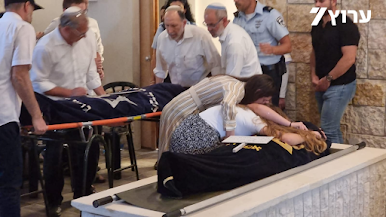
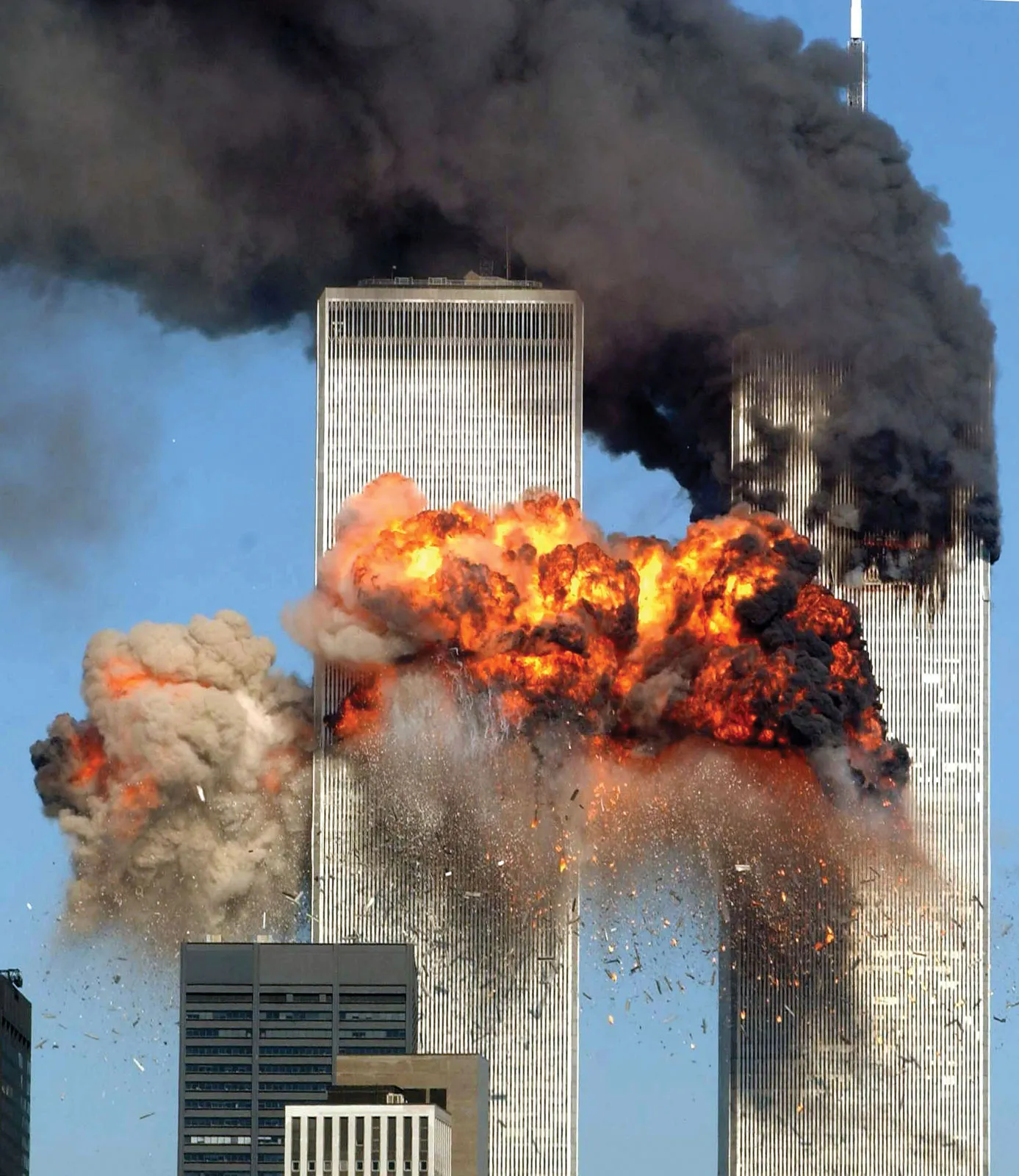
Imagine this was Britain ...


How long would David Cameron and William Hague let one fifth of the country sleep in shelters?

Labels:

March 08, 2012

Purim in Jerusalem

Great to be in the eternal capital of our people first time for me on Purim.
Here it is celebrated the day after the rest of Israel and the diaspora.
So lots of fun on the streets tomorrow.


Labels: ,

February 20, 2012

A Streetcar named Hate

From the people who brought you the European Union, open borders, multi-culturalism and human rights for terrorists ...

This was filmed on the Paris Metro Line 1, Chateau de Vincennes/Defense.

Look long and hard into the abyss ...


A friend has translated some of the chants for me ..

"We want Islam to be everywhere"
"We want the Zionists out"
"Palestinians are our brothers"
"The is no god like Allah"
"Shaheeds (martyrs) are his favourites"

Milk & Honey ... Brains and Money

Secularists reading this amazing Bloomberg report will surely conclude that it's all just a product of evolution or "intelligent design" as is their new nihilist buzzword. However, we know otherwise ...

 Feb. 20 (Bloomberg) -- Israel, under threat of war from its neighbors since being founded in 1948, produced better risk- adjusted returns than all other developed stock markets in the past decade as the technology-driven economy attracted global investors.


 The BLOOMBERG RISKLESS RETURN RANKING shows the Tel Aviv TA-25 Index returned 7.6 percent in the 10 years ended yesterday, after adjusting for volatility, the highest among 24 developed-nation benchmark indexes. Israel beat Hong Kong's Hang Seng Index, the next-best market with a risk-adjusted gain of 6.7 percent, and Norway, which had the highest total return.

 Israel outperformed as it fought a monthlong battle against Hezbollah in 2006, was involved in a similar conflict with Hamas two years later and is now threatened by Iran's nuclear program. International investors including Warren Buffett bought local companies and the economy, steered by Bank of Israel Governor Stanley Fischer, grew more than twice as fast as the U.S.
last year. Israel's stocks may extend gains as Apple Inc. and International Business Machines Corp. acquire the country's technology startups.

 "Israel is an exciting place to invest," Michael Steinhardt, the former hedge fund manager who produced returns averaging 24 percent a year over almost three decades until he retired in 1995, said in a telephone interview from Fisher Island, Florida. "The country is surrounded by enemies, it's always on the edge of extinction, but it expands and prospers."

 Beating Norway

 The Israeli gauge returned 161 percent including dividends over the last decade, the third-best performance among developed markets after Norway's OBX Index and the Hang Seng.

 While Oslo's index produced the highest return, its volatility was 35 percent greater than that of the TA-25. Statoil ASA, the world's seventh-largest oil exporter, comprises more than 25 percent of the gauge, making the market susceptible to changes in oil prices. Only one developed-market benchmark gauge, Denmark's OMX Copenhagen 20 index, gives a bigger weight to a single company.

 The TA-25's biggest members are Bank Leumi Le-Israel Ltd. and Teva Pharmaceutical Industries Ltd., each with an 11 percent share. The biggest weighting in the Standard & Poor's 500 Index, the U.S. benchmark, is Apple Inc. with 3.8 percent.

 Fischer's Role

 The risk-adjusted return, which isn't annualized, is calculated by dividing total return by volatility, or the degree of daily price-swing variation, giving a measure of income per unit of risk. A higher volatility means the price of an asset can swing dramatically in a short period of time, increasing the potential for unexpected losses compared with a security whose price moves at a steady rate.

 Bank of Israel's Fischer, a former thesis adviser to Ben S. Bernanke, helped steer the economy back to growth after the worst global recession since World War II. Fischer, who is serving his second term as governor, began buying foreign currency in 2008 after the shekel reached a 12-year high. That more than doubled the central bank's reserves in an effort to help exports, which are equal to 40 percent of gross domestic product.

 Israel's economy probably expanded 4.8 percent in 2011, compared with 1.8 percent growth in the U.S., according to the International Monetary Fund.
That follows five years of average annual growth of 4.2 percent, boosted by foreign investment in local companies.

 Outpacing G-10

 Private consumption expanded at the fastest pace in at least five years in 2010, climbing 10.2 percent, according to Central Bureau of Statistics data.
The growth attracted Hennes & Mauritz AB, Europe's second-largest clothing retailer, which has opened eight local stores since March 2010.

 The country's gross domestic product will grow 3.2 percent in 2012, according to Finance Ministry projections. That's almost three times the 1.2 percent average for the Group of 10 countries and faster than the 2.2 percent expansion in Norway, according to data compiled by Bloomberg.

 Israeli stocks benefited in the past from investor interest in emerging markets, and may underperform when the global economy slows, said Michael Shaoul, chairman of New York-based Marketfield Asset Management, which manages $1.3 billion.

 "The TA-25 was a big beneficiary of EM-related flows over the last decade,"
said Shaoul, whose Marketfield Fund beat 97 percent of its peers in 2011.
"It doesn't matter how MSCI categorizes Israel, it still trades with the emerging-market complex."

 Market Upgrade

 The MSCI Emerging Markets Index gained 189 percent in the 10 years through 2011, not including dividends, about 10 times the MSCI World Index of developed countries' gain, data compiled by Bloomberg show. Israel was added to MSCI Inc.'s developed market index in May 2010.

 After that change, investors pulled a net $795 million from Tel Aviv shares by the end of the year, while in 2009 they added $1.7 billion. All investors tracking the MSCI index had to rebalance their portfolios as Israel was removed from the emerging-markets gauges.

 This year, the TA-25 had its best start of a year since 1997, with a 3.1 percent rally in January. The measure gained 0.3 percent at 9:57 a.m. in Tel Aviv. IBM said on Jan. 31 that it's acquiring Worklight Inc., the closely held provider of a mobile application platform for smartphones and tablets whose research and development is based in Shefayim, Israel, as the world's biggest computer-services provider looks to enhance its mobile-service offerings.

 IBM, Apple

 The announcement came less than three weeks after Apple, the world's biggest smartphone vendor, acquired Anobit Technologies Ltd., an Israeli company that makes flash-memory drive parts for the iPhone and iPad. Apple paid about $390 million, according to two Anobit shareholders, who spoke on condition of anonymity.

 Buffett, 81, who in 2006 bought Israeli tool manufacturer Iscar Metalworking Cos. for $4 billion, and Steinhardt, 71, credited the success of the country's companies to technological innovation. For a small nation, Israel has contributed a disproportionately high number of Nasdaq companies, Steinhardt said.

 Steinhardt opened New York-based Steinhardt Management Co. in 1967 and is now chairman of WisdomTree Investments Inc., a New York-based asset-management firm that offers exchange-traded funds. Buffett, through four decades of takeovers and stock picks, built Berkshire Hathaway Inc.
from a failing textile mill into a $195 billion provider of insurance, energy and consumer goods, and accumulated the world's third-biggest personal fortune.

 'Looking for Brains'

 "If you go to the Middle East and you're looking for oil, skip" Israel, Buffett said in 2010. "If you're going looking for brains, just stop at Israel. You don't have to go anyplace else."

 Israel's stock market outperformed even as the country was under constant threats of violence. The Hezbollah movement, a Shiite Muslim political party that is considered a terrorist organization by Israel and the U.S., fired rockets into the country's north in the July-August 2006 Second Lebanon War.
Israel launched Operation Cast Lead, a three-week offensive against the Hamas movement, which controls the Gaza strip, in December 2008.

 Iranian President Mahmoud Ahmadinejad said Israel should be wiped off the map. Israeli leaders have been warning publicly that time is running out to stop Iran from developing nuclear weapons at a time when the country faces security threats as the so-called Arab Spring creates turmoil in its Middle Eastern neighbors.

 'Military Action'

 "It will take a lot more than a simple military action to keep the stock exchange from working," Gilad Alper, an analyst at Excellence Nessuah Investment House Ltd. in Tel Aviv, said by telephone. "The last full-scale war that we had here that involved huge parts of the economy was in 1973.
Since then, everything has been relatively small."

 Israeli companies have benefited from diverse geographic revenue. Teva, the world's largest maker of generic drugs, and Israel Chemicals Ltd., the harvester of chemicals from the Dead Sea, comprise more than 20 percent of the TA-25 and get less than 6 percent of their revenue from Israel. Exports make up about 40 percent of Israel's economy and the country's high- technology industry accounts for 47 percent of manufactured overseas shipments, according to the central bureau of statistics.

 'Attractive' Dividends'

 "There are a lot of Israeli companies with a global footprint, and many are global leaders," Steven Schoenfeld, the founder of New York-based BlueStar Global Investors LLC, a financial information and research company, said by telephone.

 Israeli companies also returned more money to investors than those in other developed markets. The dividend yield of the TA-25 Index is 3.53 percent, compared with a 2.66 percent average for companies on the MSCI World Index of developed markets. It's boosted by companies such as Cellcom Israel Ltd.
and Hot Telecommunication System, with 14 percent and 12 percent yields, respectively.

 "The dividend yield of companies on the TA-25 Index is very attractive,"
said Jacob de Tusch-Lec, a London-based money manager at Artemis Investment Management LLP in London, which oversees $17 billion.

 'Safe Model'

 Standard & Poor's raised Israel's credit rating for the first time in four years in September, lifting the country to A+, in line with Chile and Slovakia. S&P cited local economic growth for the upgrade as well as expected production of natural gas by the middle of the decade that will further increase the economy's efficiency and strengthen its fiscal and external positions.

 "Israel has very well-capitalized banks and an economy that is well-balanced with the high degree of high tech," in addition to "one of the best central bankers in the world," Artemis's de Tusch-Lec said. "This is not an economy that was built on cheap leverage," he said. "This is a safe business model."

 To contact the reporter on this story: Tal Barak Harif in New York at tbarak@bloomberg.net

 To contact the editors responsible for this story: Christian Baumgaertel at cbaumgaertel@bloomberg.net ; Emma O'Brien at eobrien6@bloomberg.net

Labels:

February 05, 2012

Douglas Murray on Iran

Outstanding address by Douglas Murray at the Cambridge Union on the motion:
A Nuclear Iran is better than a war with Iran

February 04, 2012

A friend indeed ...

Canada's prime minister Stephen Harper is renowned and loved (at least by us) for his solid support of Israel.


This week the Jerusalem Post published an interview with his Foreign Minister which underpins that support and is well worth reading here


How many other countries enslaved by Arab oil or appeasing Islamic terrorism would dare issue a postage stamp like this?


January 17, 2012

Liebmann of Arabia

Through the wonders of the Internet I have come across this photo of the valiant Jewish fighter of Tobruk mentioned in my last post: Felix Liebmann on an Israeli website by historian Meir Mindel. 


Labels: , , , ,

What's in a Streetname?

My local shopping street in Jerusalem is called Pierre-Koenig.  I've never thought to ask why it has this name.   From this email I've just received, it's nice to know the answer ... 

“The war was not going well for the British in early 1942. Rommel and his Italian allies were pushing back the British relentlessly. Losses were staggering for the British. They were being decimated in Libya and needed to retreat, to regroup, rest and resupply. British loss, after loss, British defeat after defeat, the ability of retreating in order, without disaster, was very questionable. If the Allied forces could not retreat in an orderly manner, the North African war would be lost. It did not look good. A delaying action was ordered by the British high command.
In a remote area of the Libyan Desert, near an old Turkish fort, the Free French Forces were ordered to stand and fight. The fort was built near an oasis. It was called Bir Hakeim and was the key to the great port city of Tobruk. A line was drawn ahead of the Germans. The First Free French Division, led by legendary General Marie-Pierre Koenig was ordered to hold. The French dug in. Thousands of individual fox holes were dug. Mines were laid in thick fields to slow the Germans. The French waited. A British brigade, unknown at the time to General Koenig, was hastily sent to hold the far end of the French line near Bir-el Harmat. They were a battalion of mine layers, poorly armed and provisioned, without heavy weapons, or anti-aircraft equipment but with a grim, teeth clenched determination. 
They were a battalion of 400 Jewish Palestinians under the command of Major Liebmann from Tel Aviv. It was May 26, 1942. The Jewish fighters dug in.
A German tank column approached the heavily outnumbered and out gunned Jewish position.
Raising a flag of truce the German commander came near to the Allied position and demanded they surrender or be annihilated. Noticing the strange flag flying, the German asked who they were. To the amazement of the German officer, Major Liebmann told him they were free Palestinian Jews fighting for the British government. They would not surrender. The flag was the flag of the Jewish people. It was June 2, 1942.
German 88mm canon opened up with terrible effect. German Stukas bombed and strafed, and bombed and strafed. Hundreds of sorties were eventually flown. German tanks advanced and attacked ferociously. Several were destroyed in the mine fields. A few penetrated the center of the lightly armed Jewish position. Jewish soldiers jumped on the tanks destroying them with Molotov cocktails, incinerating the German tank crews inside. Without even a radio to contact the French fighting a few miles up the line, the Jews held. Heavy black smoke billowed from the burning German tanks as the Germans retreated; their dead left on the hard, dry desert.
German and Italian armor attacked again and again on June 5 and June 6. The Jewish position held. Daily the Stukas bombed the Jews. German artillery was unrelenting, eventually destroying the Jewish water source. Still the Jewish position held refusing to surrender, even without water. Astonished the Germans continued attacking with no success. The Jews refused to surrender or be conquered.
June 10: Orders from the British 8th Army reached the French at Bir Hakeim and the Jews at Bir-el Harmat: retreat. The British 8th Army was safe. It had retreated in good order with its equipment and supplies. The delaying action could be called off. In the dark of the night of June 11, the French and the Jews slipped away, unbeknownst to the Germans. They had done the impossible.
Over the next few months, the reorganized and reequipped British 8th Army fought and defeated Rommel's famed Africa Corps at El Alamein. It was the beginning of the end for the Germans and their Italian allies in North Africa. The bloody tide of war had changed.
General Koenig watched as the ragged, unknown Allied survivors from the far end of the line staggered in to the French command center at Gasr-el-Abid. They dragged their wounded as best they could. Major Liebmann reported to a concerned General Koenig. Speaking in perfect French, he told General Koenig they were Jewish Palestinian soldiers. Of the 400 men who made up the battalion, over three hundred, 75%, had been killed or wounded. They were the survivors.

The General observed their flag flying proudly. It was being taken down and folded by a very tired Jewish soldier.
What is that man doing? Koenig demanded of Liebmann. Liebmann told the French General that British regulations did not let them fly their flag, the blue and white flag with the Star of David. The British did not want to see it. An instant command was barked. General Koenig ordered the soldier to stop folding the flag. Koenig ordered it placed on the front of his Jeep to fly next to and equal to the flag of France.
Turning to his officers, Koenig ordered all his soldiers to stand at attention and salute as the flag of the future state of Israel went by. It was the first Salute.
General Koenig remained a committed friend and advocate on behalf of Israel for the rest of his life.
In the lower Galilee, near Nazareth, trees grow in the soil of a free Israel; the Marie-Pierre Koenig Grove.”

Labels: , , , , , ,

January 16, 2012

Check-in with the Saudis

Amazing that those Saudi hackers managed to penetrate the EL AL website.


Most of the time we King David members can't even check-in online.


Why bother with Israeli proteksia when Saudis could get you the best seats and upgrades?


January 15, 2012

Putting the piss in perspective

I suddenly took a liking to Rick Perry.
He may be irrelevant to the campaign with poll numbers equating to other candidates' margin of error. He may have made some gaffes in the debates.
But he's the least politically correct of the candidates.

Unlike the shrill and sanctimonious reactions on the 'Pissing on the Taliban' story he takes the view that they're just kids. 

"These kids made a mistake, there's not any doubt about it," he said. "[They] shouldn't have done it, it's bad—but to call it a criminal act, I think is over the top," Perry told CNN.  "Obviously 18, 19-year-old kids make stupid mistakes all too often and that's what's occurred here."

Absolutely right!  These 18-19 year-olds have to live every hour of every day in Afghanistan in fear of being blown to bits by IEDs planted at the roadside by these Taliban animals, who wear no uniforms and subscribe to no Geneva conventions. These animals don't piss on dead American soldiers ... they mutilate and behead live ones.

Sure it's morally wrong to do what they did.
But don't expect these kids out in the hell of war to have the same PC education and diplomatic fragrance of Hilary Clinton or others in the ruling class

Her troops may have been pissing on the Taliban, but her boss has spent far longer pissing in the wind.


January 12, 2012

2012 - Arabs throw Jews out of Israel

This message just reached me from the valiant Women in Green:

Jews out!
Women in Green’s reaction to last night’s destruction in Mitzpe Avihai-Kiryat Arba

At 2:30 in the middle of the night, with 0 degrees outside, some 20 children were dragged away fom their beds together with their parents and were told:
“Jews-OUT!”   Immediately thereafter the tractors ran over and destroyed their homes.

The Mitzpe Avichai neighborhood was built on land that belongs to the municipality of Kiryat Arba Hevron and was already destroyed ten times.
Every destruction brings about construction, especially in Mitzpe Avihai,  and thank G-d the neighborhood has already 8 families and public buildings.

Once again the IDF used Arab workers to do the dirty work of expelling Jews from their homes ; and these Arabs by the way stole from the expelled Jews jewelry and work utensils.

Women in Green call upon all to donate funds in order to rebuild the neighborhood . We also call upon the Prime Minister to stop hiding behind Ehud Barak and finally
start building the Land of Israel proudly. This is the one and only answer to Yair Lapid and Sheli Yachimovitz.

The government of Israel has to stop the game of jumping once to the right  and once to the left. It does not help at all.

Only with a clear policy of applying Israeli sovereignty over Judea and Samaria, the building of thousands of homes, the spreading of the population from the shore to the mountains-
only this way will deterrence be built.

Only this way will our country be built.


Labels: ,

January 08, 2012

All about jobs ...

Labels:

Add to Technorati Favorites