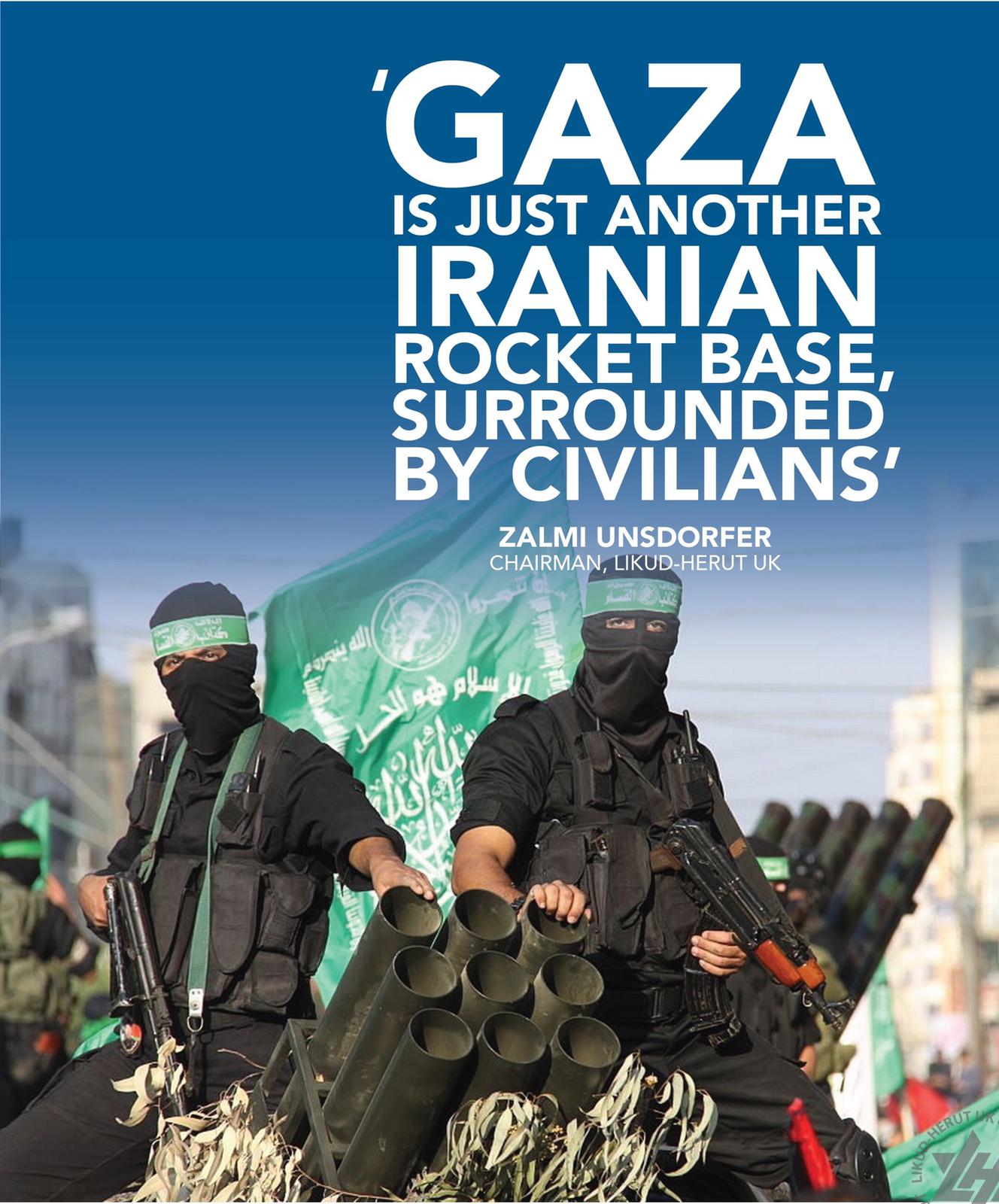
I got this by email. Apart from the fact that there was never any 'massacre' in Gaza, it makes interesting reading....
 ISRAEL IS A REFUGE, BUT A REFUGE UNDER SIEGE
Through making a film about the Israeli-Arab conflict, artist Nicky Larkin found his allegiances swaying
ISRAEL IS A REFUGE, BUT A REFUGE UNDER SIEGE
Through making a film about the Israeli-Arab conflict, artist Nicky Larkin found his allegiances swaying
by Nicky Larkin
Independent (Ireland)
March 16, 2012
I used to hate Israel. I used to think the Left was always right. Not any more. Now I loathe Palestinian terrorists. Now I see why Israel has to be hard. Now I see the Left can be Right -- as in right-wing. So why did I change my mind so completely?
Strangely, it began with my anger at Israel's incursion into Gaza in December 2008 which left over 1,200 Palestinians dead, compared to only 13 Israelis. I was so angered by this massacre I posed in the striped scarf of the Palestinian Liberation Organisation for an art show catalogue.
Shortly after posing in that PLO scarf, I applied for funding from the Irish Arts Council to make a film in Israel and Palestine. I wanted to talk to these soldiers, to challenge their actions -- and challenge the Israeli citizens who supported them.
I spent seven weeks in the area, dividing my time evenly between Israel and the West Bank. I started in Israel. The locals were suspicious. We were Irish -- from a country which is one of Israel's chief critics -- and we were filmmakers. We were the enemy.
Then I crossed over into the West Bank. Suddenly, being Irish wasn't a problem. Provo graffiti adorned The Wall. Bethlehem was Las Vegas for Jesus-freaks -- neon crucifixes punctuated by posters of martyrs.
These martyrs followed us throughout the West Bank. They watched from lamp-posts and walls wherever we went. Like Jesus in the old Sacred Heart pictures.
But the more I felt the martyrs watching me, the more confused I became. After all, the Palestinian mantra was one of "non-violent resistance". It was their motto, repeated over and over like responses at a Catholic mass.
Yet when I interviewed Hind Khoury, a former Palestinian government member, she sat forward angrily in her chair as she refused to condemn the actions of the suicide bombers. She was all aggression.
This aggression continued in Hebron, where I witnessed swastikas on a wall. As I set up my camera, an Israeli soldier shouted down from his rooftop position. A few months previously I might have ignored him as my political enemy. But now I stopped to talk. He only talked about Taybeh, the local Palestinian beer.
Back in Tel Aviv in the summer of 2011, I began to listen more closely to the Israeli side. I remember one conversation in Shenkin Street -- Tel Aviv's most fashionable quarter, a street where everybody looks as if they went to art college. I was outside a cafe interviewing a former soldier.
He talked slowly about his time in Gaza. He spoke about 20 Arab teenagers filled with ecstasy tablets and sent running towards the base he'd patrolled. Each strapped with a bomb and carrying a hand-held detonator.
The pills in their bloodstream meant they felt no pain. Only a headshot would take them down.
Conversations like this are normal in Tel Aviv. I began to experience the sense of isolation Israelis feel. An isolation that began in the ghettos of Europe and ended in Auschwitz.
Israel is a refuge -- but a refuge under siege, a refuge where rockets rain death from the skies. And as I made the effort to empathise, to look at the world through their eyes. I began a new intellectual journey. One that would not be welcome back home.
The problem began when I resolved to come back with a film that showed both sides of the coin. Actually there are many more than two. Which is why my film is called Forty Shades of Grey. But only one side was wanted back in Dublin. My peers expected me to come back with an attack on Israel. No grey areas were acceptable.
An Irish artist is supposed to sign boycotts, wear a PLO scarf, and remonstrate loudly about The Occupation. But it's not just artists who are supposed to hate Israel. Being anti-Israel is supposed to be part of our Irish identity, the same way we are supposed to resent the English.
But hating Israel is not part of my personal national identity. Neither is hating the English. I hold an Irish passport, but nowhere upon this document does it say I am a republican, or a Palestinian.
My Irish passport says I was born in 1983 in Offaly. The Northern Troubles were something Anne Doyle talked to my parents about on the nine o'clock News. I just wanted to watch Father Ted.
So I was frustrated to see Provo graffiti on the wall in the West Bank. I felt the same frustration emerge when I noticed the missing 'E' in a "Free Palestin" graffiti on a wall in Cork. I am also frustrated by the anti-Israel activists' attitude to freedom of speech.
Free speech must work both ways. But back in Dublin, whenever I speak up for Israel, the Fiachras and Fionas look at me aghast, as if I'd pissed on their paninis.
This one-way freedom of speech spurs false information. The Boycott Israel brigade is a prime example. They pressurised Irish supermarkets to remove all Israeli produce from their shelves -- a move that directly affected the Palestinian farmers who produce most of their fruit and vegetables under the Israeli brand.
But worst of all, this boycott mentality is affecting artists. In August 2010, the Ireland-Palestine Solidarity Campaign got 216 Irish artists to sign a pledge undertaking to boycott the Israeli state. As an artist I have friends on this list -- or at least I had.
I would like to challenge my friends about their support for this boycott. What do these armchair sermonisers know about Israel? Could they name three Israeli cities, or the main Israeli industries?
But I have more important questions for Irish artists. What happened to the notion of the artist as a free thinking individual? Why have Irish artists surrendered to group-think on Israel? Could it be due to something as crude as career-advancement?
Artistic leadership comes from the top. Aosdana, Ireland's State-sponsored affiliation of creative artists, has also signed the boycott. Aosdana is a big player. Its members populate Arts Council funding panels.
Some artists could assume that if their name is on the same boycott sheet as the people assessing their applications, it can hardly hurt their chances. No doubt Aosdana would dispute this assumption. But the perception of a preconceived position on Israel is hard to avoid.
Looking back now over all I have learnt, I wonder if the problem is a lot simpler.
Perhaps our problem is not with Israel, but with our own over-stretched sense of importance -- a sense of moral superiority disproportional to the importance of our little country?
Any artist worth his or her salt should be ready to change their mind on receipt of fresh information. So I would urge every one of those 216 Irish artists who pledged to boycott the Israeli state to spend some time in Israel and Palestine. Maybe when you come home you will bin your scarf. I did.
Nicky Larkin's 'Forty Shades of Grey' will premiere in Dublin in May;Labels: gaza, hamas, nicky larkin